EV Range Anxiety Explained: Do Electric Cars Really Fit UK Driving?
January 1, 2026
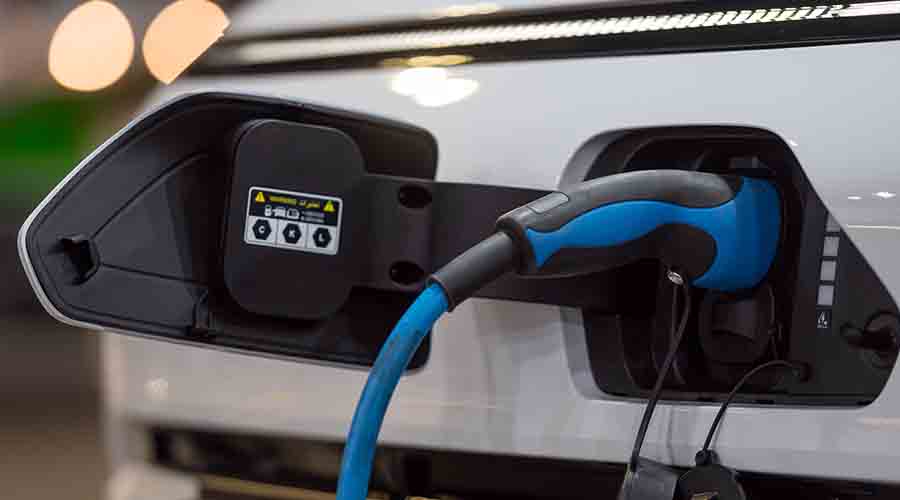
Range anxiety is one of those phrases that has stuck, partly because it taps into a very British fear of being caught out. Nobody wants to be the person rolling onto the hard shoulder of the M6, hazard lights blinking, while their passengers ask why they did not just buy the diesel.
But range anxiety is also a moving target. Electric cars have improved, the charging network has grown, and the way people actually drive in the UK often looks nothing like the long-haul road trip we imagine when we picture “running out”. The real question is not “Can an EV do 300 miles?” It is “Does an EV suit the way most of us drive, most of the time, and can we handle the exceptions without hassle?”
Let’s unpack what range anxiety really is, what causes it in Britain, and whether today’s electric cars genuinely fit UK driving.
What range anxiety really means
Range anxiety is rarely just about a number on a dashboard. It is about uncertainty. With a petrol or diesel car, the refuelling experience is uniform: pull in, fill up, pay, leave. With an EV, the experience depends on where you live, where you park, what charger you find, what the weather is doing, whether the charger works, whether it is busy, and how fast your car can charge.
That is why two drivers can own the same EV and have completely different levels of confidence. Someone with a driveway and a cheap overnight tariff may barely think about range. Someone in a flat with on-street parking may spend more mental energy on charging than they ever did on fuel.
So range anxiety is often “charging anxiety” in disguise.
How far do we actually drive in the UK?
A useful antidote to worry is a reality check. The UK is not a country where most people routinely drive hundreds of miles in a day. We do take long journeys, but they are not the norm.
Government travel statistics for England show that people travelled an average of 6,082 miles in 2024, which works out at roughly 16 to 17 miles per day if you spread it across a year.
That daily average is not a perfect measure, because we do not drive the same distance every day, and it is “per person” rather than “per driver”. Still, it is a solid reminder that for many households, the typical day is school runs, shopping, commuting, and short hops across town. Those are exactly the sorts of journeys where EVs are at their best.
Even if you are doing 30 to 40 miles most weekdays, an EV with a real-world range of 180 to 250 miles gives you several days of driving before you would need to charge, and that is before you factor in home charging.
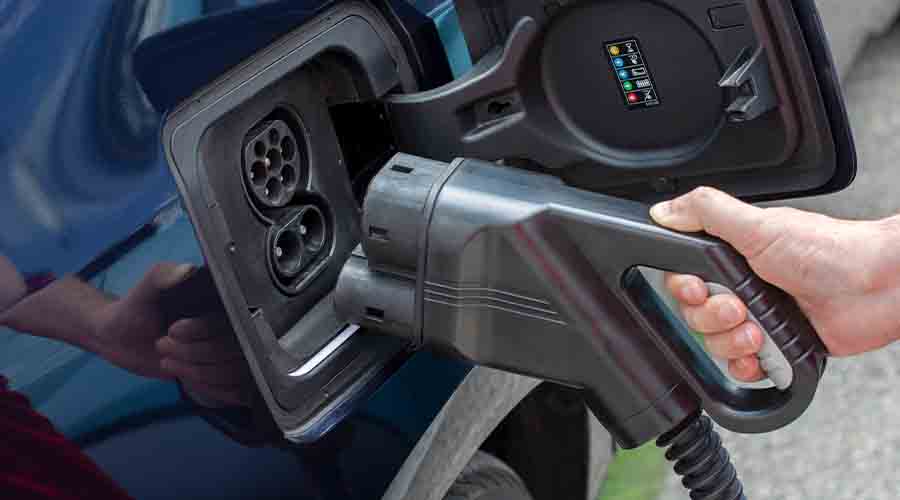
The UK driving patterns that trigger anxiety
If average driving is modest, why does range anxiety still feel so common? Because anxiety is not caused by the average day. It is caused by the awkward day.
In the UK, those awkward days often look like this:
- Motorway driving at 70 mph – EV efficiency drops at higher speeds. Aerodynamic drag rises quickly, and the car uses more energy to maintain motorway pace. A car that looks brilliant on mixed roads can feel less impressive when it spends two hours on the M1.
- Cold, wet weather – British winters are not Arctic, but cold temperatures can reduce range, especially on short trips where the cabin is heated from cold start. Rain and standing water also increase rolling resistance.
- Hilly routes and heavy loads – The Pennines, the Highlands, or a fully loaded family car on the way to Cornwall will all use more energy. EVs do recover some energy on descents through regenerative braking, but climbing still costs.
- Unfamiliar charging stops – The idea of charging is easy. The reality can be variable: you might arrive to find bays blocked, chargers out of service, or queues at peak times.
These are the conditions that create uncertainty, which is the real fuel of range anxiety.
WLTP range vs real range: why the numbers can mislead
Most new EVs are advertised with a WLTP range figure. WLTP is a test standard and it is useful for comparing cars, but it can feel optimistic if you drive mostly at motorway speeds, in winter, or with a heavy right foot.
A practical way to think about it is:
- Urban and mixed driving often gets you closer to the headline figure.
- Motorway driving in cold weather can pull you well below it.
That does not mean manufacturers are lying. It means a single test cycle cannot capture every British use case, especially the ones that worry people most. If you want a calmer EV life, you plan around the real number, not the brochure number.
The charging network: better than you think, still uneven
Britain’s public charging network has grown quickly, and the most important growth for long journeys is at the rapid and ultra-rapid end.
Zapmap’s 2025 statistics report shows strong growth in ultra-rapid chargers (150 kW and above), with around 9,893 in that power band by the end of December 2025, up sharply year on year. Overall device counts are also climbing. Reporting based on Zapmap figures puts the UK at roughly 87,000 to 88,000 public chargepoints by the end of 2025.
There is also a specific focus on the strategic road network, because that is where range anxiety spikes. The Department for Transport has highlighted that there are over 6,000 open-access rapid and ultra-rapid chargers within one mile of England’s motorways and major A-roads (as of mid 2025, using Zapmap data).
So the network is bigger and faster than many people assume. A Gridserve press note even points out that public awareness lags reality, with many drivers underestimating the size of the network. But it is not perfect.
Availability remains patchy outside the best served areas, and local on-street charging is still the biggest pain point for drivers without driveways. Growth is real, but distribution matters, and it is fair to say some regions still feel behind.

Home charging: the quiet reason EVs work for many drivers
If you can charge at home, range anxiety changes shape. Instead of thinking, “When will I refuel?”, you think, “Do I need to plug in tonight?”
That is a small shift, but it is massive psychologically. You start most mornings with a “full tank”. Your day-to-day range becomes almost irrelevant, because your routine is built around topping up rather than running down.
This is why two EV owners can talk past each other. One is living the easy version of EV ownership, and the other is living the hard version. If you cannot charge at home, you can still make it work, but the choice of car, the local charging options, and your willingness to plan become much more important.
Public charging costs: anxiety is not always about miles
A growing slice of “range anxiety” is actually “cost anxiety”.
On rapid chargers, prices can be high, and they can vary a lot by network. Some industry commentary has put rapid and ultra-rapid charging pricing around the mid 70 pence per kWh area in late 2025, with slower public charging typically lower, although real prices vary by operator and location.
That matters because it changes behaviour. Drivers who mostly charge at home can see very low running costs. Drivers who rely on rapid public charging can end up paying close to, or sometimes more than, the per-mile cost of an efficient petrol car.
When charging feels expensive and uncertain, it is easy for the mind to spiral into “What if I cannot find a charger, and the one I do find costs a fortune?”
So fitting an EV to UK driving is not only about range. It is also about how you expect to charge, and what it will cost in your situation.
Do EVs fit UK driving in practice?
For most UK households, the answer is yes, with a couple of big caveats.
Where EVs fit brilliantly
- Commuting, school runs, and local errands – the typical UK driving pattern is short and stop-start, which suits EV efficiency.
- Mixed A-road driving – often efficient, and you can use regenerative braking on rolling routes.
- Quiet comfort – EVs are calm at low speeds and in traffic, which is where plenty of British driving happens.
Where EVs can feel awkward
- Frequent long motorway journeys – still doable, but you need to be comfortable with charging stops.
- No home charging and limited local infrastructure – the planning burden is real.
- Peak holiday travel – bank holiday weekends and summer getaways can put pressure on popular charging sites, even if there are more chargers than before.
The “fit” depends less on your bravado and more on your charging access.
A realistic way to choose the right EV range for Britain
A lot of people overbuy range because they picture the worst day, not the normal day. The trick is to buy for your life, not your fear.
A simple UK-friendly approach:
- Work out your regular week – If your typical day is 20 miles and your typical week is 150 miles, you do not need a giant battery to cope.
- Work out your longest routine journey – Maybe you drive from London to Manchester, or Glasgow to the Lakes, a few times a year. Look up the distance, add a buffer, and see how many charging stops you would need.
- Decide what level of planning you can tolerate – Some people are happy stopping once for 20 minutes. Others want to do the journey with one short stop at most. That preference matters.
- Think about charging speed, not just range – A car that charges quickly can make long trips painless. A car with a big range but slow charging can be more frustrating.
In other words, do not buy range alone. Buy a charging experience.
How to beat range anxiety on UK roads
You do not need to become an EV geek, but a few habits help:
- Start with a home-like routine – even if you use public charging, treat charging as topping up when convenient, not running the battery down to the last 10 per cent.
- Use reliable networks on long trips – for motorway journeys, aim for hubs with multiple rapid chargers, not isolated single units.
- Arrive with a buffer – you do not need to be dramatic about it, but planning to arrive with 15 to 20 per cent is a calmer way to travel than pushing it.
- Slow down a touch if you need to – dropping from 70 mph to 65 mph can make a noticeable difference to energy use, and it can be the difference between a relaxed arrival and a tense one.
- Preheat while plugged in – in winter, warming the cabin while the car is charging can save battery on the first miles.
Range anxiety fades when you build trust. Trust comes from repeated, uneventful journeys.
So, do electric cars really fit UK driving?
For a large share of British drivers, EVs already fit the reality of UK motoring very well. Average distances are modest, and the public network is larger and faster than public perception suggests, with notable recent growth in high-powered charging.
The sticking point is not whether EVs can handle the average day. They can. The sticking point is whether you can charge easily where you live, and whether the public charging experience on your occasional long trips feels simple enough to trust.
If you have a driveway, or dependable charging near home, range anxiety is likely to disappear quickly. If you do not, it does not mean an EV cannot work, but you should choose carefully, prioritise charging speed and network access, and be honest about how much planning you are willing to do.
In Britain, EV range anxiety is less about miles and more about confidence. The good news is that confidence is learnable, and the infrastructure is moving in the right direction.